

Reducing carbon impact is one of the Casino group’s top priorities. This involves taking action both in direct operations and across the rest of the value chain.
Adaptation measures
mitigation measures
The Group is committed to mitigating its impact on climate change by reducing its greenhouse gas (GHG) emissions and promoting sustainable operating, production, and consumption practices. This approach is part of an overall strategy to strengthen the sustainability of its business model.
In 2025, the Casino Group defined and validated its 2030 Climate Plan, setting targets for reducing its carbon footprint in scopes 1, 2, and 3, and specifying areas for action.
2030 GOALS
-42%
greenhouse gas emissions in scopes 1 and 2 compared to 2023
-25%
greenhouse gas emissions in scope 3 compared to 2023
50%
renewable electricity consumption
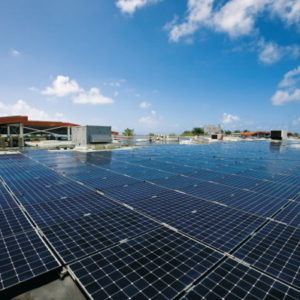
Taking action for energy efficiency
The energy consumption of stores is monitored and controlled remotely to optimize electricity consumption.
Energy Performance Contracts are being rolled out in stores, offering theoretical energy efficiency gains of 3% to 8%.
In 2022, the Casino Group and all of its brands—Casino, Monoprix, Franprix, Naturalia, and Cdiscount—signed the Ecowatt Commitment Charter. This is a program designed to raise awareness of the importance of “consuming at the right time” and, more generally, of controlling energy demand.
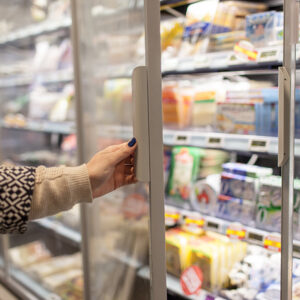
Opting for refrigerants with low climate impact
The carbon footprint associated with refrigerants accounts for the vast majority of the group’s direct emissions. In order to reduce this footprint, the group:
- Invests in CO2 refrigeration equipment, which has the lowest environmental impact (GWP of 1).
- Carries out retrofits to replace existing refrigerants with fluids that have a lower global warming potential.
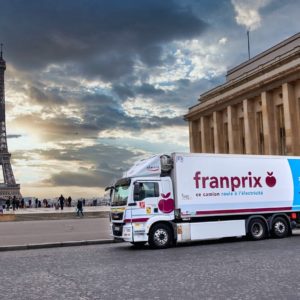
Building sustainable logistics by reducing freight transport emissions
To reduce the carbon impact of transportation, logistics teams optimize flows and are shifting toward modes of transportation with a lower environmental impact.
The group has equipped itself with a dedicated fleet that is partly low-carbon, running on electricity, biogas, rapeseed oil, or hybrid power. As a result, 100% of Franprix’s dedicated fleet is low-carbon, and more than 300 Franprix stores are supplied by river transport via the Seine.
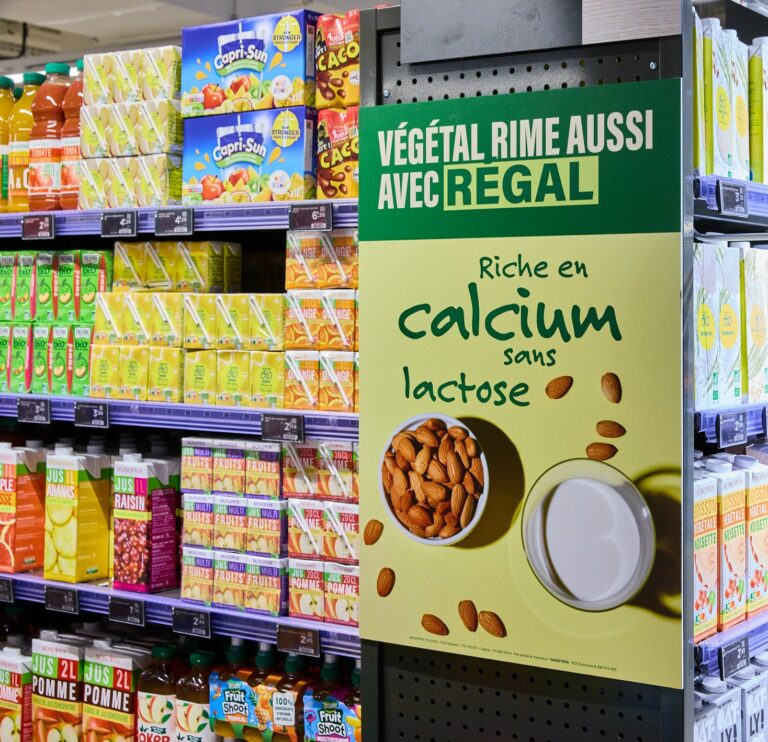
Decarbonizing the product offering
Nearly 98% of the group’s total carbon footprint consists of indirect emissions, more than 80% of which are linked to products sold in stores and online, due to their upstream phases, manufacturing, transport, and use.
The development of a “low-carbon” offering is a major focus for reducing this footprint. With this in mind, we are developing a committed offering that includes plant-based alternatives, organic products, repackaged products, and low-consumption products sold in bulk or on a deposit basis.
As decarbonization of the product offering is largely in the hands of manufacturers and suppliers, the group is a founding member of the L.E.S.S. (Low Emission Sustainable Sourcing) initiative, a collective initiative led by nine agents from the retail sector, as well as the French Federation of Trade and Distribution and Perifem, which aims to create conditions for dialogue and the exchange of climate information via the Open Climat platform.
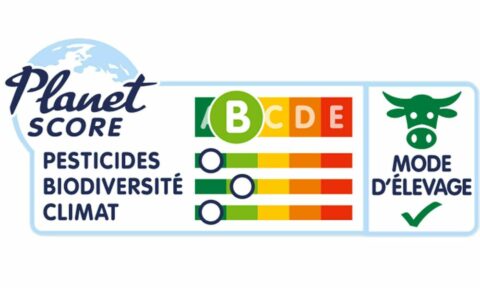
In order to raise consumer awareness of the environmental impact of products, the group supports the principle of environmental labeling and displays the Planet Score on some of its products, indicating not only the product’s climate impact but also its impact on pesticides, biodiversity, and animal welfare.
Fight against waste
The Casino Group actively collaborates with its suppliers to:
- Extend the use-by dates of products without increasing health risks;
- Remove the Minimum Shelf Life Dates (MSLD) on certain product categories.
In addition, the Group has equipped itself with innovative tools to help stores order the right product at the right time, with a view to optimizing sales and combating food waste. Optimizing orders requires a better understanding of product rotation dynamics and a detailed analysis of products sold.
The “cassé frais” policy (immediate reduction on the retail price) is a key part of the Group’s policy to reduce food waste and increase the purchasing power of French consumers.
Since 2017, thanks to partnerships established with various stakeholders, the Group has been offering anti-waste surprise baskets in stores, allowing customers to purchase a selection of unsold items with short shelf lives at low prices.
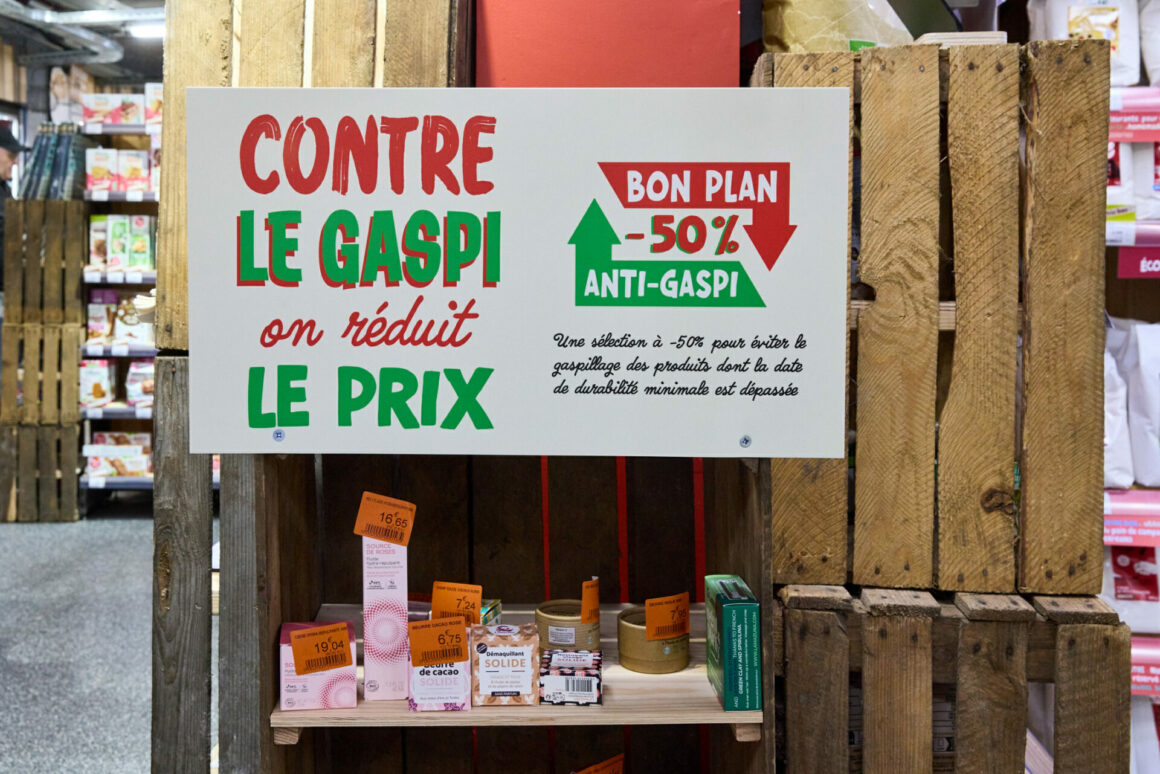
In addition, the Group is setting up “anti-waste corners” in its stores, areas dedicated to the sale of products that would previously have been discarded. These corners offer increased visibility for products with short use-by dates, as well as grocery products (cereals, vegetable oil, canned goods, etc.) with a minimum shelf life of less than one month or that has expired.
Goods approaching their use-by date are donated to partner associations, in accordance with the Garot law. For more information: Needs of the population.
To support the rollout of these innovations and foster the emergence of new solutions, the Casino Group is actively pursuing a policy of raising awareness and training its customers and employees.
In addition, Cdiscount has been giving a second life to unsold, broken, or returned products for several years.